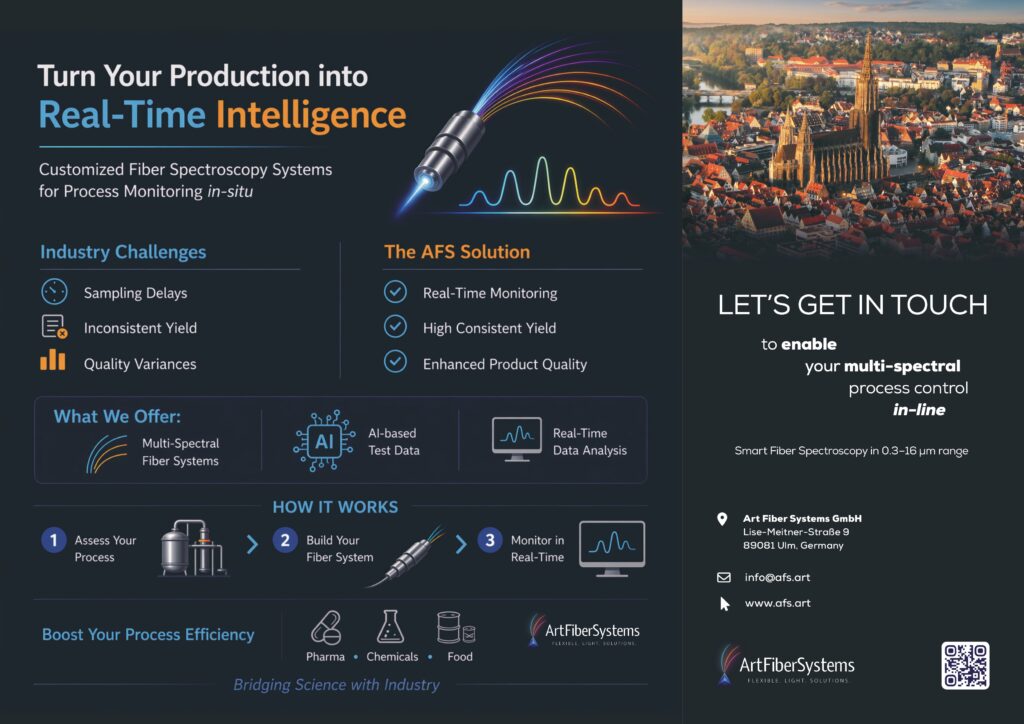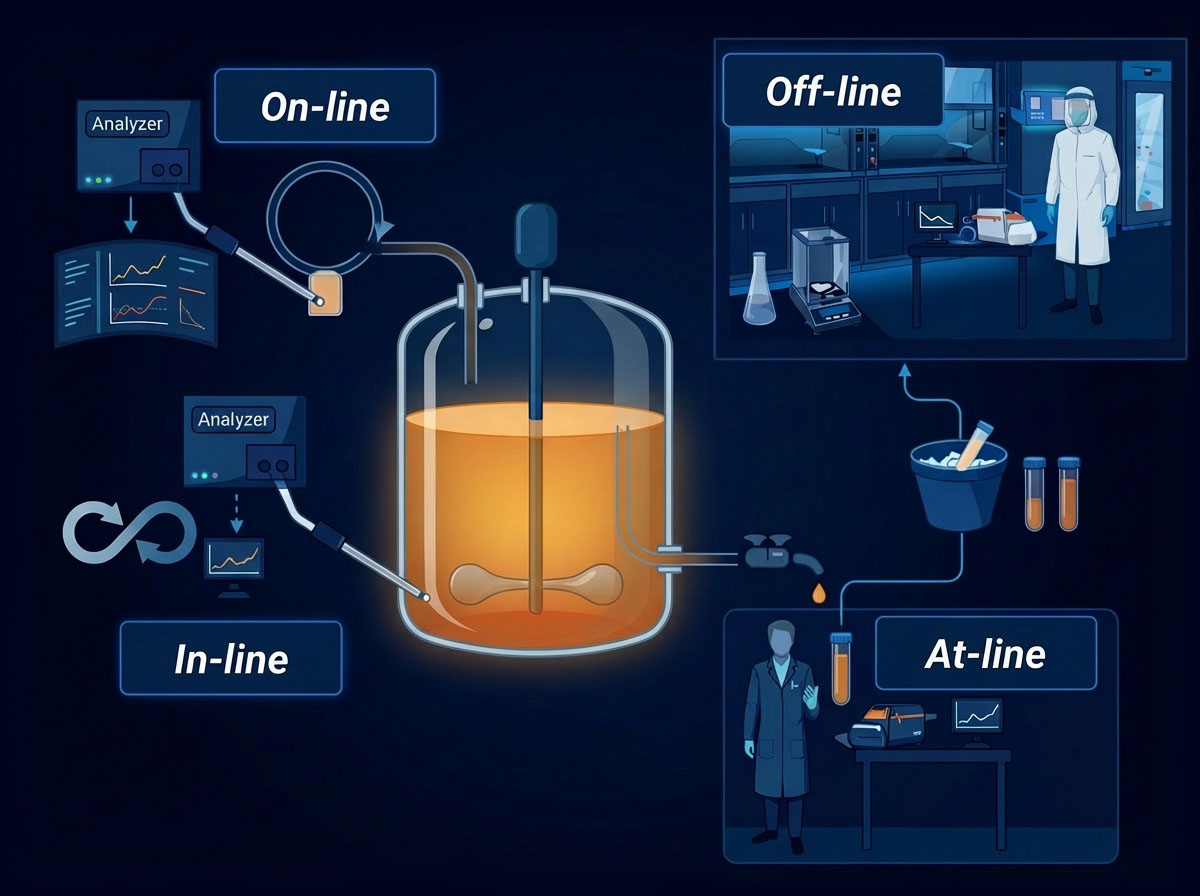
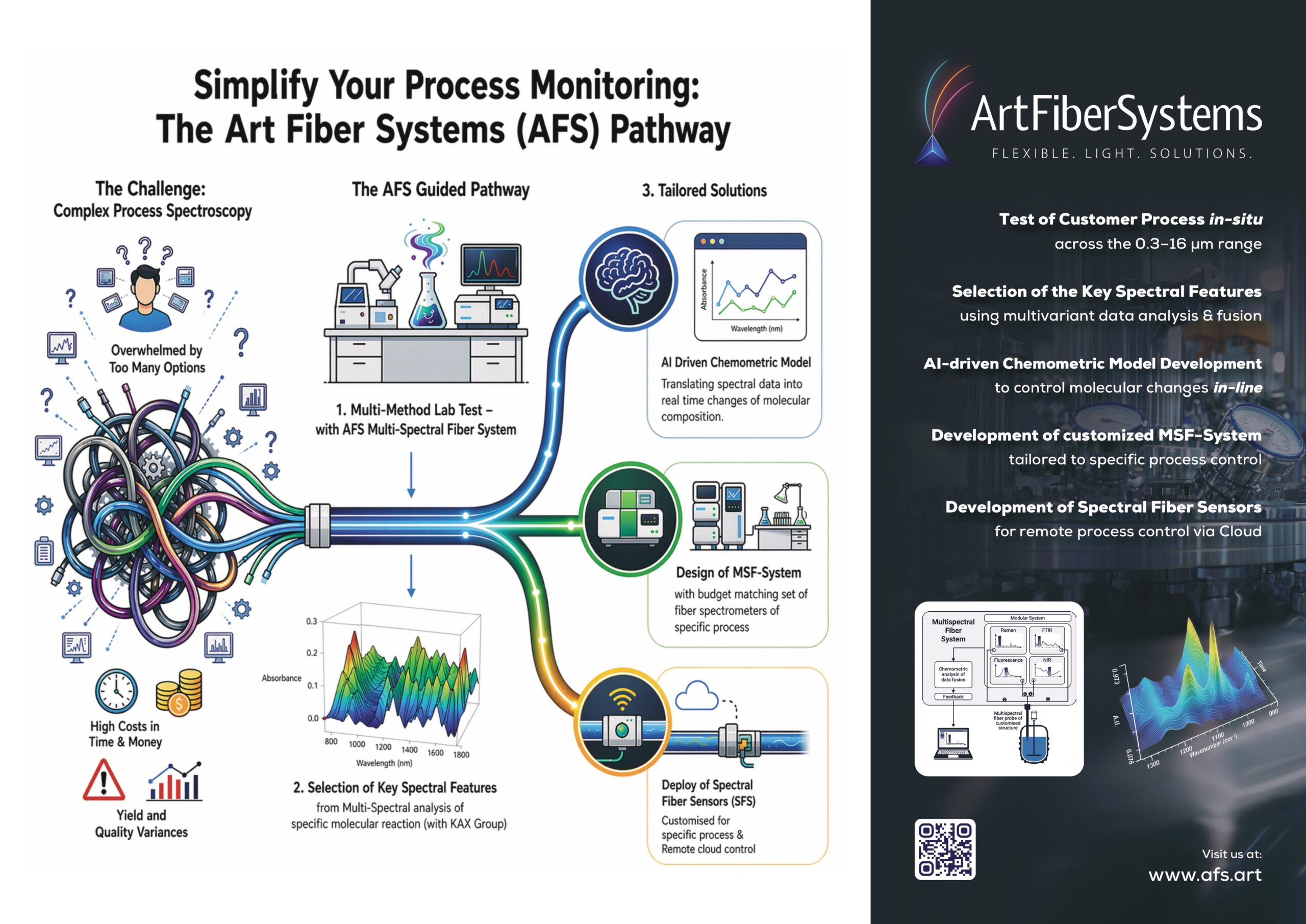
The fundamental bottleneck in pharmaceutical, biotech, chemical, and food manufacturing is latency. Relying on manual laboratory sampling for process control inherently forces production lines into a reactive state. When operators wait for off-line analysis, they are correcting errors that have already occurred, accumulating variances in yield and product quality. True automation requires continuous, in-situ intelligence.
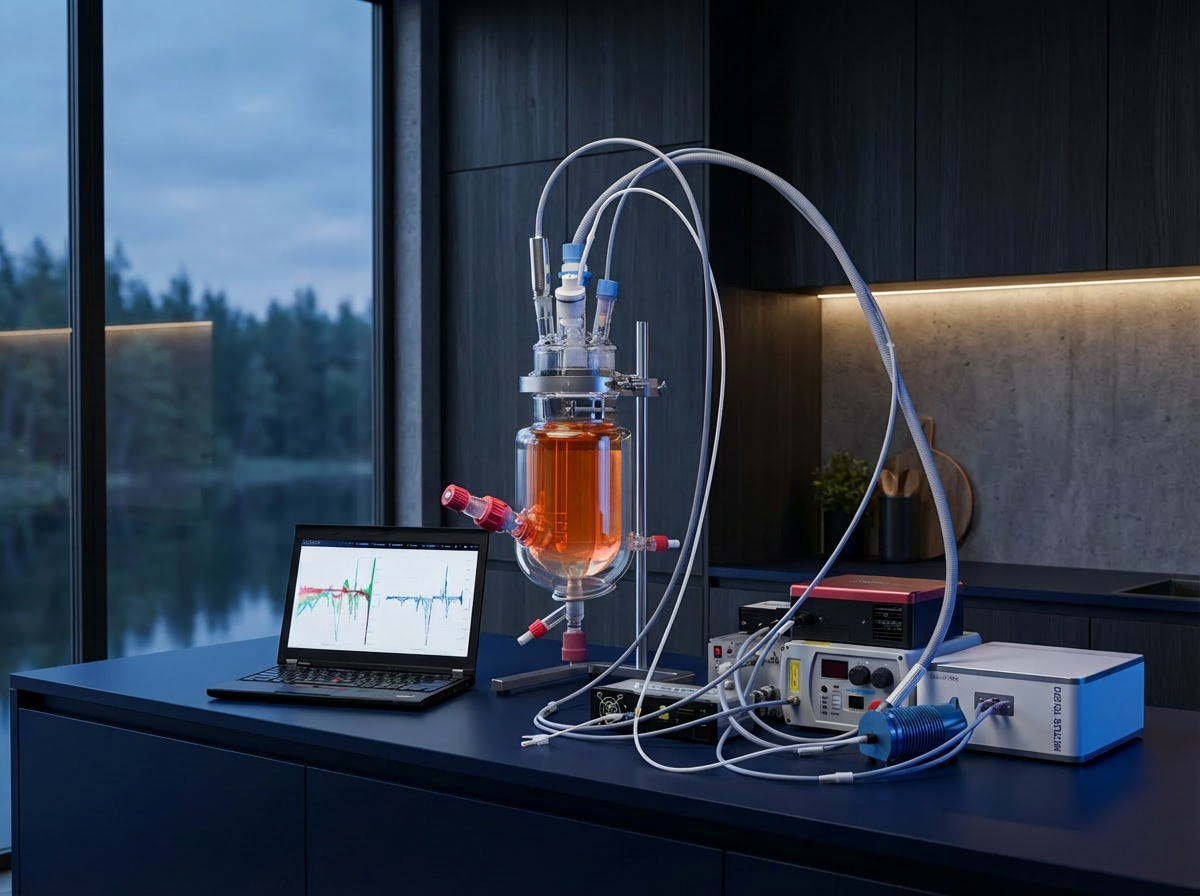
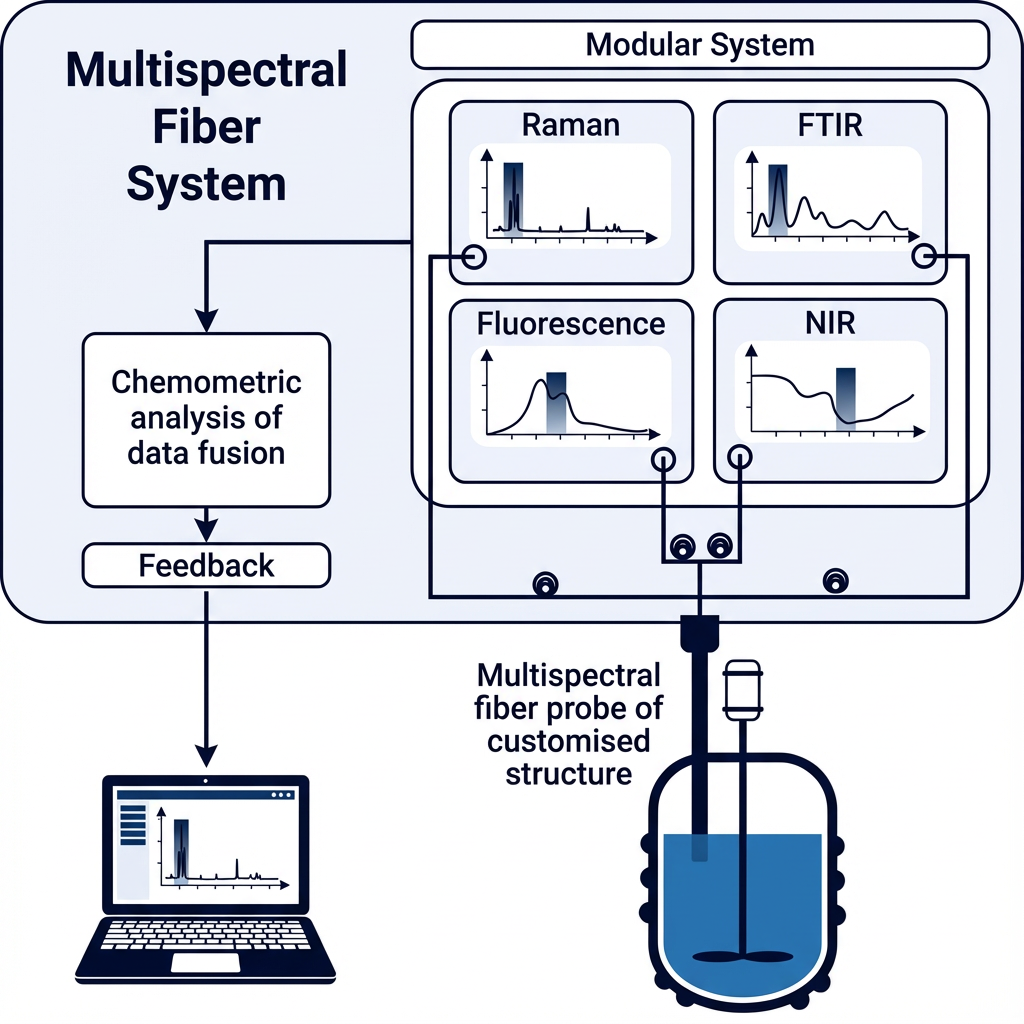
Process Analytical Technologies (PAT) resolve this latency. By deploying multi-spectral fiber spectroscopy directly into the process environment, facilities monitor molecular reactions exactly as they happen. Operating across a broad spectral range—from 200 nm to 16 µm—this approach enables the continuous in-line utilization of UV-Vis, Near-Infrared (NIR), Mid-InfraRed (Mid-IR), and Raman technologies.
Art Fiber Systems (AFS) engineers the transition from delayed sampling to automated control. Supplying isolated components is insufficient; deploying a functional process control loop requires integrating the correct optical hardware with robust analytical models. AFS bridges the gap between complex spectroscopy and practical industrial deployment through a structured methodology:
Empirical Feasibility Testing Theoretical assumptions fail in industrial environments. AFS conducts rigorous feasibility studies—either in our laboratories or directly on-site—to empirically determine the exact Multi-Spectral Fiber (MSF) configuration required for your specific molecular reactions.
Agnostic System Integration We operate independently of individual component manufacturers. By sourcing the optimal spectrometers, probes, and light sources from across the global market, we eliminate the trial-and-error phase. We architect systems optimized specifically for the end-user’s chemical environment, rather than forcing a proprietary hardware stack.
Chemometric Model Development Raw spectral data is mathematically useless without proper transformation. AFS develops the AI-driven chemometric models required to fuse multi-variant data, translating continuous optical measurements into actionable, automated process control parameters.
Relying on historical data to control active reactions is a systemic operational flaw. Transitioning to in-line, predictive monitoring is a strict requirement for process optimization. Engineer a control loop that actually operates in real-time.